
 メディアライブラリー
Partnering with Our Customers to Shape a New Era of Logistics
Japan’s logistics industry is under strain, and Mitsubishi Fuso knows it. Driver shortages, tighter working-hour regulations, and rising fuel are present-day constraints reshaping how goods move across the country. In response, Mitsubishi Fuso has been working with Wise Systems, an AI-powered logistics solution developed by U.S.-based Wise Systems, to explore how delivery planning and day-to-day operations can adapt to this new reality. The effort is less about technology for its own sake, and more about whether AI can function inside the practical, highly specific demands of Japanese logistics.
A System Facing Structural Limits
The pressures on Japan’s logistics sector are converging at once. The Work Style Reform Act has reduced allowable working hours. The retirement of the baby-boomer generation has accelerated an already serious driver shortage. At the same time, fuel and labor costs continue to rise, pushing logistics expenses higher across the board.
Logistics remains a critical social infrastructure, supporting nearly every area of economic activity. Yet many companies are discovering that long-established operating models—built on experience, manual planning, and individual expertise—are reaching their limits.
Why Mitsubishi Fuso Looked to AI
Rather than relying solely on incremental improvements, Mitsubishi Fuso began examining whether delivery planning itself could be handled differently. That search led to Wise Systems.
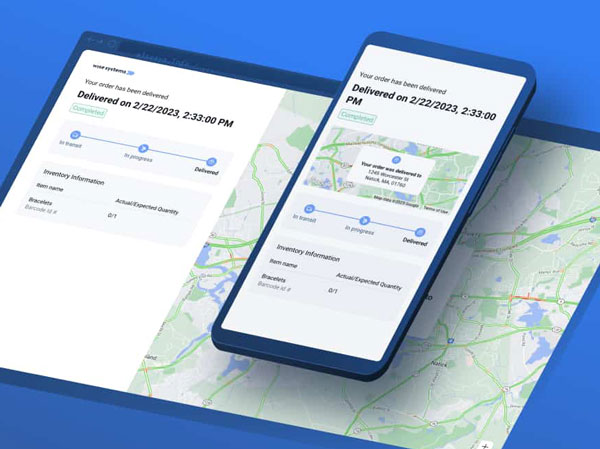
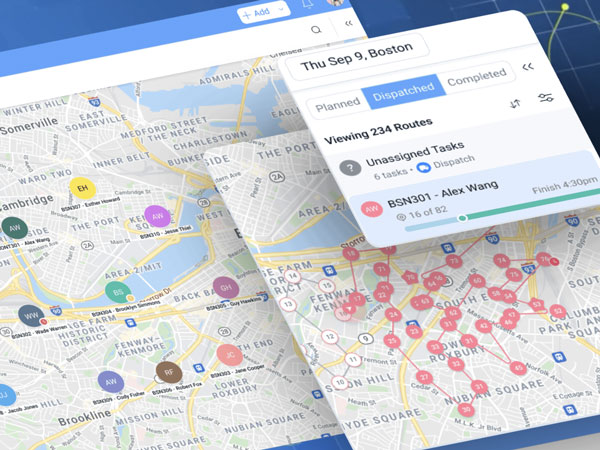
Wise Systems uses AI and machine learning to quickly generate delivery plans, supported by a smartphone app that enables real-time tracking and progress management. While the system had already been used in other markets, its applicability to Japan was uncertain. Japanese logistics operations are often more detailed, tightly scheduled, and dependent on local knowledge than those elsewhere.
Proving Value on the Ground
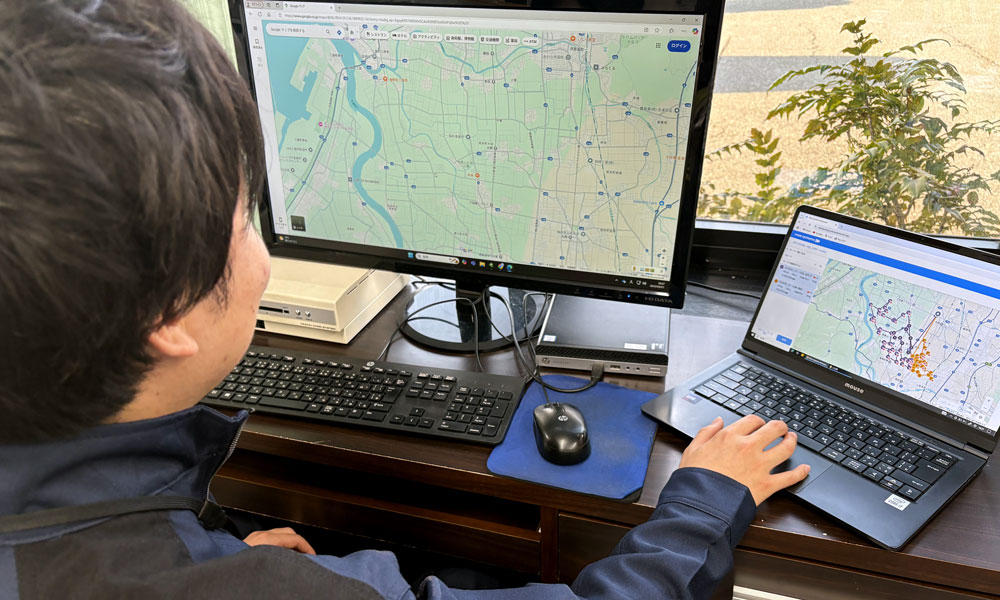
To address those concerns, Mitsubishi Fuso worked directly with customers to conduct proof-of-concept trials, testing the system in real operations, collecting feedback from users, and refining functionality through repeated use. Features were adjusted, workflows were refined, and confidence grew as improvements became apparent. Based on those results, Wise Systems was introduced to the Japanese market.
“We’re grateful that—even across different countries—we share the same philosophy of ‘doing what’s best for the customer.”
The Thinking Behind Wise Systems
Wise Systems Inc. was founded in 2014 by members of the MIT Media Lab, when smartphone usage and access to location data were expanding rapidly. The company focused on logistics not just as a technical challenge, but as a system shaped by human behavior.
COO Jemel Derbali explains: “Every aspect of economic activity is supported by logistics. Improving logistics efficiency contributes not only to reducing CO₂ emissions but also to making cities more livable by reducing the number of vehicles on the road.”
He also emphasizes usability. “No matter how sophisticated route optimization technology is, it means nothing unless drivers actually use it. We listened to the voices of drivers and dispatchers, and used real operational data to develop a system that becomes increasingly practical over time. This enables it to automatically generate routes that are more likely to be followed and more effective in real operations.”

Adapting a Global System to Japan
Wise Systems entered the Japanese market in late 2021, but the transition required adjustment.
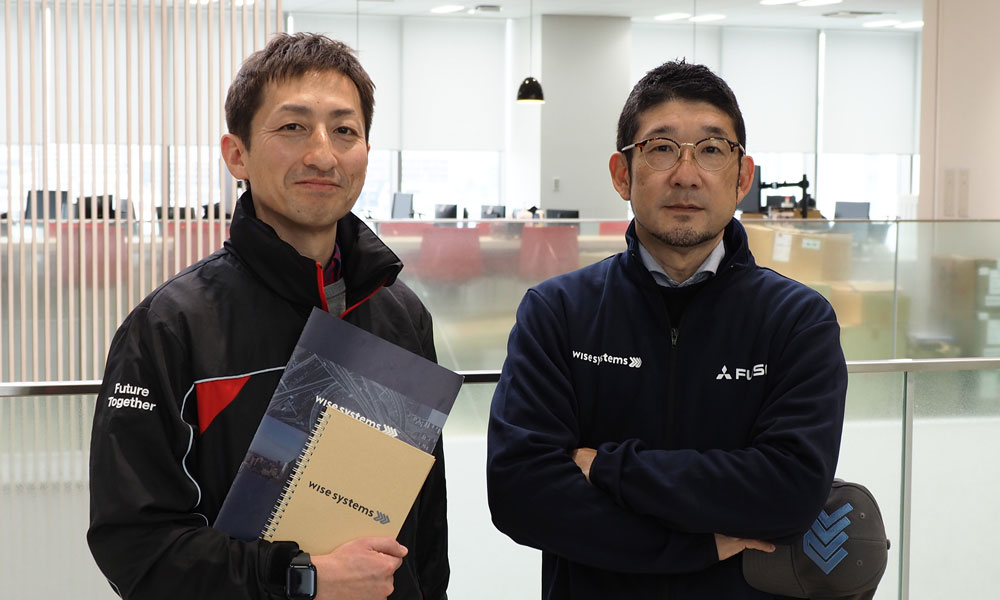
“This solution was originally developed for the U.S. market, so some functions needed by Japanese customers were missing, and certain operations couldn’t be supported at first,” recalls Mitsubishi Fuso manager Kazuaki Yamamoto.
By closely studying customer operations and working collaboratively to address gaps, Mitsubishi Fuso and Wise Systems adapted the platform to Japan-specific needs. Wise Systems responded to feature requests and offered customizations at reasonable cost, helping expand adoption.
“We’re grateful that—even across different countries—we share the same philosophy of ‘doing what’s best for the customer,’” Yamamoto says.
What the Results Look Like
At Ryobi Holdings Co., Ltd., Wise Systems was adopted for its AI-driven learning capabilities and smartphone app integration. The company increased loading efficiency by 13%, reduced monthly vehicle dispatches from 91 to 80, and achieved a 13.3% reduction in CO₂ emissions per ton of transported volume.
Fukui Postal Transportation Co., Ltd. had a different requirement.
For a new business, the company needed a solution that could be introduced quickly and operated with a single vehicle. Optimized routing and app-based operational support increased deliveries per driver and eliminated the need for additional subcontracted vehicles, resulting in significant cost savings.
One Problem at a Time
The Mitsubishi Fuso team responsible for Wise Systems is small, but focused on long-term use rather than rapid expansion.
Sales representative Takuma Hayashi describes the work this way.
“When we treat our customers’ challenges as our own and they are satisfied with the solutions we propose, that’s when I feel truly rewarded.”
The challenges vary: reducing reliance on individual dispatchers, lowering driver workload, responding to post-COVID demand, or strengthening shipper management systems.
What remains consistent is the approach: listening first, adjusting second, and improving through use.
As Japan’s logistics industry continues to change, the question is not whether systems will need to adapt, but how. For Mitsubishi Fuso and its customers, Wise Systems is less a declaration of transformation than a practical attempt to meet today’s constraints with tools that work where it matters most, in daily operations.