
 メディアライブラリー
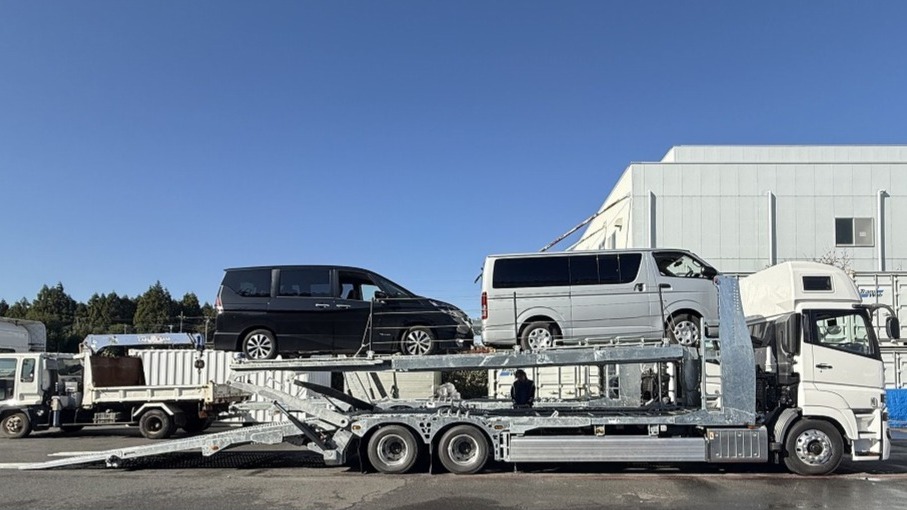
In December 2025, a new kind of car carrier rolled into Japan—one that marries a Japanese chassis with Italian bodywork technology. At the center of this ambitious effort is Transweb Co., Ltd. president Takeshi Maezawa, a leader known for turning big ideas into road-ready reality. His résumé includes stunts that stick in your mind—such as putting 13,000 km on a brand-new truck across Europe before shipping it to Japan.

A Collaboration Forged by Industry Constraints
The spark for “ROLFO CLX J” came from a familiar pain point: car carriers take too long to build. In many cases, a single unit requires several years to complete, a long horizon for operators who need to plan fleet strategy with precision.
“There simply wasn’t a manufacturing method that could quickly adapt to market demand. So, we thought—why not take on the challenge ourselves?” — Takeshi Maezawa, President, Transweb
Transweb looked to Europe’s advanced coachbuilding expertise and, drawing on existing ties, approached ROLFO of Italy with a proposal: combine ROLFO’s bodywork with Mitsubishi Fuso’s Super Great chassis to create an original car carrier for the Japanese market.
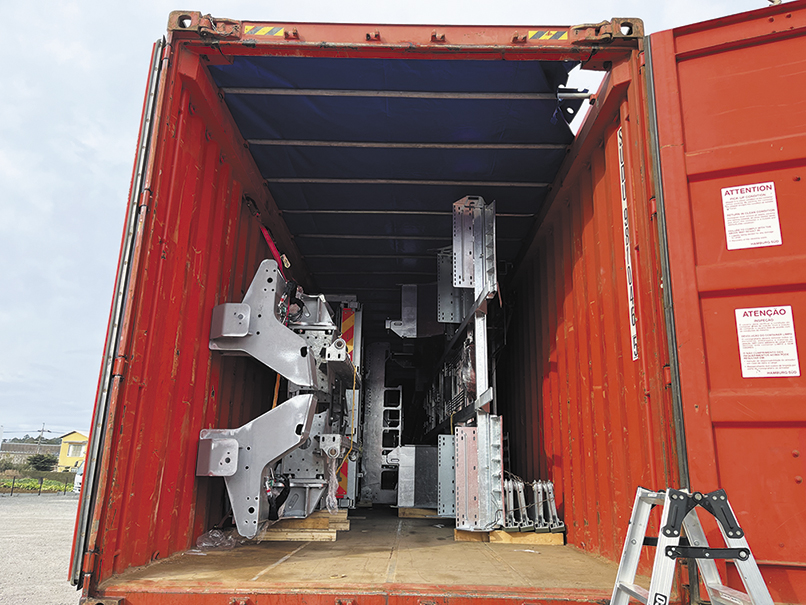
A prototype was built in Italy, and the experience gained during its development led to a redesigned and modularized body for more efficient production and assembly. One of these modular body kits, packed into a 40-foot open-top container roughly 12 meters long, was shipped to Japan for final assembly.
Seven Days to First Drive: Knock Down Production
To accelerate deployment, Transweb adopted a knock down production method: manufacture the body in Italy, then assemble it onto the chassis in Japan.
“We adopted a knock down production method, in which the body kit manufactured in Italy is shipped to Japan and then assembled onto the chassis in our facility. For the first unit produced domestically, ROLFO engineers provided direct guidance, and from the second unit onward, a six-member in-house team took over.” — Maezawa
The result is speed that upends industry norms: the entire assembly takes about seven days. Transweb expects to shorten that timeline further as tools and workflows improve. Shipping kits instead of completed vehicles also reduces logistics costs—another win for scalability.
Comes Together: Day-by-Day Assembly (Day 1–7)
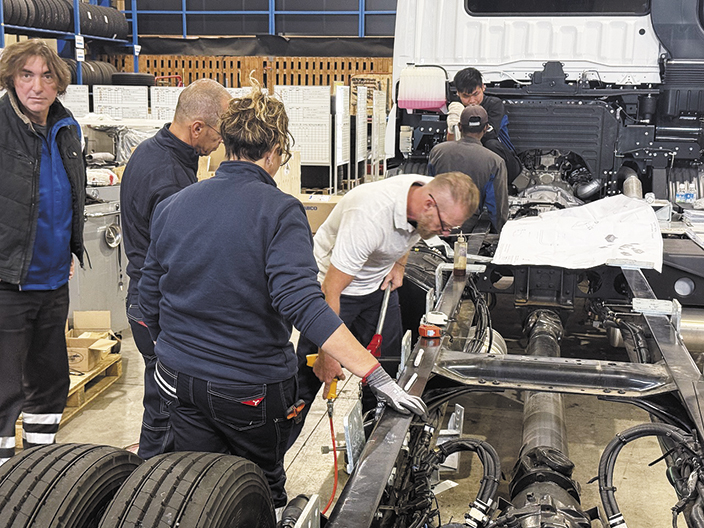
Day 1 — Confirm chassis dimensions and loading layout
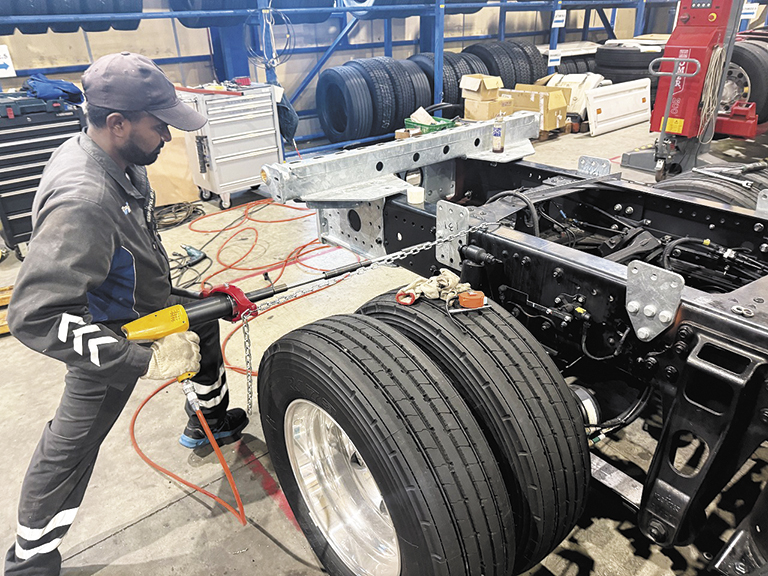
Day 2 — Remove unnecessary frame sections; drill mounting-bracket holes
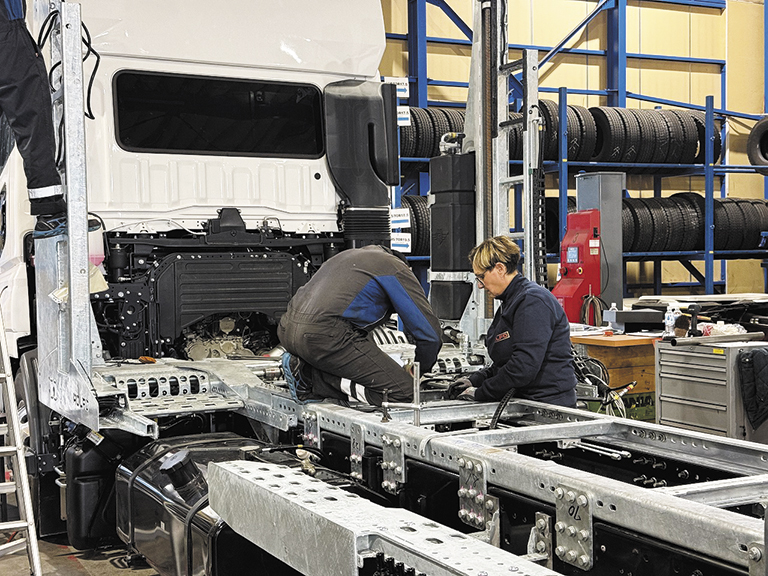
Day 3 — Assemble lower deck

Day 4 — Assemble overhang section and upper-deck arms

Day 5 — Assemble upper deck

Day 6 — Install work lights; route wiring in the cab

Day 7 — Final adjustments and loading test
Built to Last, Built to Carry, Built to Look Good
The CLX J doesn’t stop at speed. It brings tangible, operator-friendly advantages:
• High Corrosion Resistance
• European-style zinc-coated components significantly improve durability.
“It wouldn’t be unrealistic for these units to remain in service across two or even three generations of the base vehicle,” notes Maezawa.
Serious Payload, EV-Ready
With a maximum payload of 10 tons, the car carrier can transport four vehicles of about 2.5 tons each—especially valuable for EVs, where heavy battery packs quickly eat into capacity. Conventional medium-duty carriers, commonly limited to 7–9 tons, often struggle here; the CLX J meets the moment.
Clean, Efficient Design
The structure minimizes support pillars, resulting in a clean, simple form that improves operational efficiency and creates a modern, refined look. It’s a carrier designed to work hard and present well. Transweb plans to introduce around 20 units within the year and is exploring wider domestic sales.